- April 26, 2026
- 1:26 pm
Toddlerhood is a remarkable stage of development. Between the ages of one and three, children are driven by a powerful desire to do things independently. They want to carry their own cup, put on their shoes, wipe spills, and imitate the daily work they see adults doing. While these moments can sometimes feel messy or slow, they are actually signs of healthy growth.
At Cedarbrook Montessori, we view these everyday actions as essential learning opportunities. In Montessori education, “Practical Life” refers to activities that help children care for themselves, care for their environment, and function confidently within their community. These experiences build coordination, concentration, independence, and self-esteem.
The good news is that Practical Life learning does not require expensive toys or elaborate materials. Your home already offers the perfect environment for meaningful skill-building. With a few adjustments and a patient mindset, families can support toddlers in becoming capable, confident helpers.
Why Practical Life Matters in the Toddler Years
Toddlers learn best through hands-on experience. They are not interested in passive observation for long; they want to participate. When a child pours water, folds a cloth, or places shoes by the door, they are doing far more than completing a task.
They are developing:
- Fine motor control through grasping, pouring, buttoning, and carrying
- Gross motor coordination through walking carefully, sweeping, and climbing
- Concentration by repeating purposeful actions
- Order and routine through consistent sequences of steps
- Confidence by mastering real-life skills
- Independence through meaningful contribution
These abilities form the foundation for later academic learning, emotional regulation, and social responsibility.
Creating a Toddler-Friendly Home Environment
Children are more successful when their environment is prepared for independence. Small changes can make daily routines more manageable.
Consider:
- Low hooks for coats or bags
- A small stool for handwashing or kitchen access
- Child-sized cups, plates, and utensils
- Baskets or trays for toys and clothing
- A low shelf with limited, organized choices
- Cleaning tools sized for small hands
When materials are accessible, toddlers can act with less adult intervention. This supports autonomy and reduces frustration.
Practical Life Skills to Practice at Home
1. Self-Care Skills
Self-care activities help toddlers build body awareness and confidence.
Encourage your child to:
- Wash hands independently
- Brush teeth with guidance
- Attempt dressing and undressing
- Put dirty clothes in a hamper
- Use a tissue and discard it properly
- Comb hair or wipe face after meals
Choose clothing that supports independence, such as elastic waistbands, wide neck openings, and shoes with simple fasteners.
Allow extra time during routines. A toddler who struggles with socks for five minutes is often learning persistence, coordination, and problem-solving.
2. Food Preparation and Mealtime Participation
The kitchen offers rich Practical Life opportunities. Toddlers enjoy real work and often become more interested in food when they help prepare it.
Safe activities include:
- Washing fruits and vegetables
- Peeling bananas or boiled eggs
- Spreading soft foods like hummus or butter
- Pouring water into a small cup
- Carrying napkins to the table
- Stirring ingredients in a bowl
- Clearing dishes after meals
Use child-sized tools whenever possible. A small pitcher or lightweight tray is easier to manage than adult equipment.
Expect spills. Spills are part of learning, not failure.
3. Care of the Environment
Toddlers naturally want to care for the spaces they use. Involving them in household maintenance builds responsibility and respect.
Try offering:
- Wiping tables with a cloth
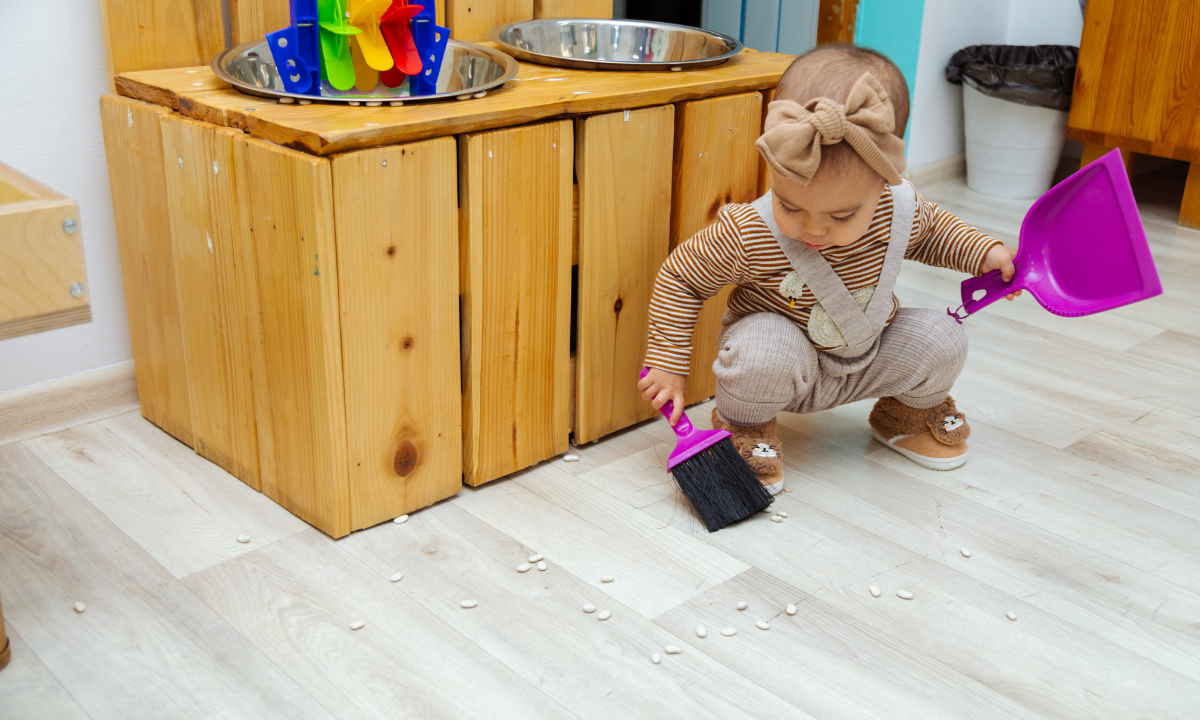
- Sweeping crumbs with a child broom
- Watering plants
- Dusting shelves
- Sorting laundry by color
- Putting toys back in baskets
- Feeding a pet with supervision
These tasks give children a sense of belonging. They learn that home is a shared community where everyone contributes.
4. Grace and Courtesy
Practical Life also includes social behavior. Toddlers are beginning to understand how to interact respectfully with others.
Model and practice:
- Saying “please” and “thank you”
- Greeting family members
- Waiting for a turn
- Offering help
- Using gentle hands
- Returning items after use
- Listening when someone speaks
Young children learn social skills primarily through observation. Calm, consistent modeling is more effective than repeated correction.
How to Introduce Activities Successfully
The way an activity is presented matters. Montessori encourages adults to slow down and demonstrate clearly.
Use these principles:
Show, don’t over-explain. Toddlers learn through watching movement. Demonstrate each step quietly and slowly.
Break tasks into simple steps. Instead of saying, “Clean the table,” show how to get a cloth, wipe in circles, and return the cloth.
Use real materials. Children are more engaged by genuine tools than toy versions, provided they are safe and appropriately sized.
Allow repetition. Toddlers often repeat tasks many times. This repetition strengthens mastery.
Focus on process, not speed. Independence takes time. What is slow now becomes efficient later.
Managing Messes and Mistakes
Many parents hesitate to involve toddlers because tasks take longer or create disorder. This concern is understandable, but mistakes are a normal part of development.
If water spills, show how to wipe it.
If clothes go on backward, allow the child to notice and adjust.
If crumbs scatter while sweeping, offer another attempt.
When adults respond calmly, children learn resilience rather than shame.
Perfection is not the goal. Competence grows through trial, repetition, and gradual refinement.
The Adult’s Role: Support Without Taking Over
One of the most valuable things an adult can do is pause before stepping in. Toddlers often need a little more time than adults expect.
Instead of immediately helping, try:
- Observing first
- Offering one small cue
- Asking, “Would you like help?”
- Assisting only with the step that is truly difficult
This preserves the child’s sense of ownership. Too much intervention can unintentionally communicate, “You cannot do this yourself.”
At Cedarbrook Montessori, we emphasize that independence is built through trust. When children are trusted with meaningful tasks, they rise to the occasion.
Building Routines That Last
Consistency helps toddlers succeed. Repeating the same opportunities daily creates familiarity and confidence.
Examples:
- Put shoes on the shelf after coming home
- Carry plate to sink after meals
- Water plants every Saturday morning
- Help load laundry each evening
- Wipe table after snack time
These predictable routines reduce resistance and help children understand expectations.
Practical Life skills are not extras added to childhood, they are central to healthy development. When toddlers participate in real work at home, they gain more than useful habits. They develop concentration, coordination, confidence, and a deep sense of belonging.
