- May 2, 2026
- 11:35 am
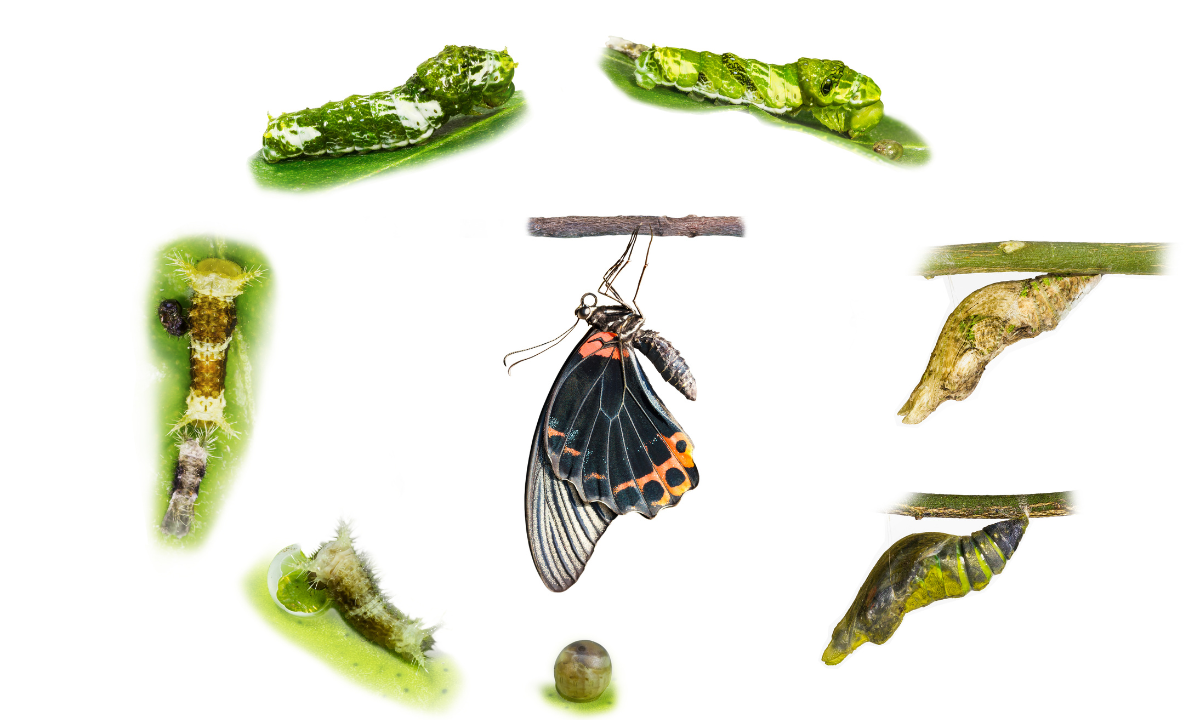
There’s a moment every Cedarbrook teacher knows well. A child crouches low over a terrarium, nose almost touching the glass, watching something tiny and alive that wasn’t there yesterday. They don’t ask to move on. They don’t look up. They are, in the truest sense, captivated.
That moment quiet, self-directed, and full of genuine awe, is exactly what Maria Montessori spent her life designing for. And few lessons bring it to life more powerfully than teaching children about the butterfly life cycle.
Why Life Cycles?
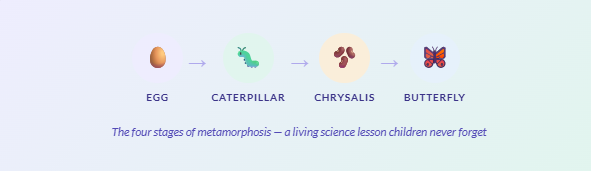
In most traditional classrooms, children learn about metamorphosis through a textbook diagram and a worksheet. They memorize four words egg, larva, pupa, adult and move on. But do they understand it? Do they feel it?
At Cedarbrook Montessori School, we believe understanding only becomes real when it lives in a child’s body and memory not just on a page. Life cycle lessons, done the Montessori way, offer children something rare: the chance to watch science happen in real time, right in front of them.
And here’s what the research keeps confirming: children between the ages of three and six are in what Montessori called the sensitive period for nature. Their minds are primed to absorb the natural world with a depth and hunger they may never quite have again. This window is precious. We don’t want to waste it on worksheets.
How We Teach It at Cedarbrook
Our approach unfolds in stages much like the butterfly itself. It’s not a single lesson. It’s a living, weeks-long experience woven into the fabric of the classroom environment.
Stage 01 – Introduce the Story
We begin with beautifully illustrated books and Montessori three-part cards, giving children the vocabulary before the experience.
Stage 02 – Meet the Caterpillars
Live caterpillars arrive in the classroom. Children observe daily, sketch what they see, and journal changes in their own words.
Stage 03 – Watch the Chrysalis
The stillness of the chrysalis stage sparks the deepest questions. Why isn’t it moving? What’s happening inside? We sit with the mystery.
Stage 04 – Release Day
Children release the butterflies into the garden together a moment of joy, closure, and connection to the wider living world.
More Than Science It’s Life Skills
What surprises many parents is how much more than science this unit teaches. When children tend to caterpillars each morning, checking on them before they even hang up their backpacks, they are practicing patience. When they sketch the chrysalis on day three and compare it to the one on day seven, they are practising careful observation and scientific thinking. When they argue gently about whether the butterfly is “ready to come out yet,” they are practising collaborative reasoning.
The Role of the Prepared Environment
Montessori classrooms are designed so that learning materials are always within a child’s reach literally and figuratively. During life cycle units, our shelves are rich with intentional provocations:
Three-part nomenclature cards let children match the word “chrysalis” to its image and label independently. Life cycle puzzles allow them to sequence the stages with their hands, not just their heads. Nature journals with blank pages encourage drawing what they see not what they think they should see. Magnifying glasses sit beside the terrarium, always available, never locked away.
This environment communicates something powerful to every child who enters: Your curiosity is welcome here. Explore.
Connecting the Life Cycle to Bigger Ideas
One of the most beautiful aspects of this unit is how naturally it opens doors to deeper conversations. Children begin to notice cycles everywhere. The seed that becomes a plant. The egg that becomes a frog. Their own baby photos versus who they are today.
At Cedarbrook, we call this the web of wonder. That moment when a child starts connecting one thing to another, and another, and suddenly the world is not a collection of isolated facts but a living, breathing, interconnected story. Teaching the butterfly life cycle isn’t just about butterflies. It’s about teaching children how to think about change itself.
What Children Take With Them
We have alumni who return to visit Cedarbrook years later now in middle school, high school, and beyond and they still remember the butterflies. Not because a teacher told them something important, but because they lived something important. They remember crouching by the terrarium. They remember the morning the chrysalis split open. They remember standing in the garden with their hands open, feeling the strange lightness of letting something go.
That is the deepest purpose of Montessori education. Not to fill children with knowledge, but to show them that learning is one of life’s great joys something they are completely capable of doing themselves, on their own terms, at their own pace.
Want to see this in action? see hands-on learning like this in person — book a tour.
See how these ideas work in a real classroom at Cedarbrook Montessori in Ajax and Oakville, or book a visit.
