- July 13, 2026
- 10:25 am
Every parent wants their child to grow into a kind, confident, and respectful individual. While reading, writing, and math are important, social skills are just as essential for lifelong success. Children who know how to communicate politely, solve problems peacefully, and show empathy often build stronger relationships and become more confident in different social situations.
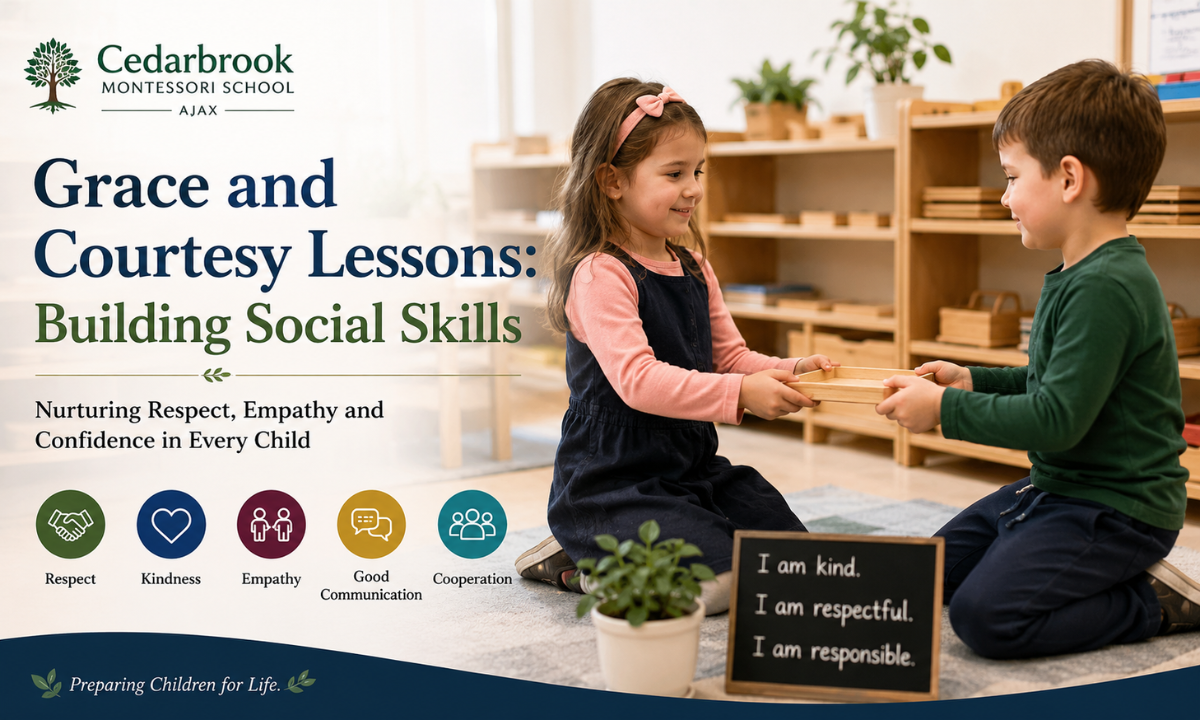
At Cedarbrook Montessori School, we believe that learning good manners is about much more than saying “please” and “thank you.” Through Grace and Courtesy lessons, children learn the everyday social skills they need to interact respectfully with others, develop independence, and become caring members of their community.
These lessons are woven naturally into the Montessori environment, helping children practice positive behavior every day instead of simply memorizing rules.
What Are Grace and Courtesy Lessons?
Grace and Courtesy lessons are a key part of the Montessori curriculum. They teach children how to behave respectfully in different situations while encouraging kindness, patience, and consideration for others.
Unlike traditional discipline methods, Montessori focuses on modeling appropriate behavior and giving children opportunities to practice social interactions in real-life situations.
Children learn skills such as:
- Greeting others politely
- Listening without interrupting
- Asking for help respectfully
- Waiting patiently for their turn
- Speaking with kindness
- Respecting personal space
- Taking care of shared materials
- Resolving disagreements peacefully
These small daily lessons become lifelong habits that help children succeed both inside and outside the classroom.
Why Social Skills Matter in Early Childhood
Early childhood is one of the most important stages for developing emotional intelligence and social confidence. During these years, children learn how to understand their own emotions while recognizing the feelings of others.
Strong social skills help children:
- Build meaningful friendships
- Communicate clearly
- Develop empathy
- Handle conflicts calmly
- Work well in groups
- Become independent learners
- Build confidence in new situations
These abilities continue to support children throughout elementary school, high school, university, and their future careers.
How Montessori Teaches Grace and Courtesy
One of the unique aspects of Montessori education is that social learning happens throughout the day rather than during a single lesson.
Teachers carefully demonstrate respectful behavior, and children observe before practicing themselves.
For example, a teacher may calmly demonstrate how to:
- Offer help to a classmate
- Introduce themselves politely
- Walk carefully around another child’s workspace
- Return classroom materials properly
- Ask permission before interrupting
Children then practice these actions repeatedly until they become natural habits.
This hands-on approach makes learning meaningful because children understand not only what to do but also why respectful behavior matters.
Building Respect Through Daily Practice
Respect is one of the foundations of Montessori education.
Children learn to respect:
- Themselves
- Other people
- Their teachers
- Classroom materials
- Nature
- Their learning environment
Rather than being told what not to do, children experience positive examples every day.
For instance, they learn how to:
- Wait until someone finishes speaking
- Use quiet voices indoors
- Carry materials carefully
- Clean up after activities
- Thank classmates for helping
These simple actions create a peaceful classroom where every child feels valued and safe.
Developing Communication Skills
Good communication begins at an early age.
Grace and courtesy lessons encourage children to express themselves confidently while also becoming good listeners.
Children practice:
- Making eye contact
- Speaking politely
- Using respectful words
- Listening carefully
- Asking thoughtful questions
- Expressing emotions appropriately
These communication skills improve classroom participation and help children feel more confident when interacting with adults and peers.
Learning Empathy and Kindness
Empathy is one of the most valuable life skills a child can develop.
Montessori classrooms encourage children to notice how others feel and respond with kindness.
Children learn to:
- Comfort a friend who is upset
- Celebrate another child’s success
- Offer help when someone needs assistance
- Share classroom responsibilities
- Include others during group activities
By practicing empathy every day, children begin to understand the importance of caring for others.
Conflict Resolution the Montessori Way
Disagreements are a normal part of childhood. Instead of solving every problem for children, Montessori teachers guide them toward peaceful solutions.
Children learn how to:
- Express their feelings calmly
- Listen to another person’s perspective
- Find fair solutions together
- Apologize sincerely
- Forgive and move forward
These conflict-resolution skills build emotional resilience and prepare children for healthy relationships throughout life.
Encouraging Independence and Responsibility
Grace and Courtesy lessons also support independence.
Children become responsible for:
- Cleaning their workspace
- Organizing classroom materials
- Caring for plants
- Helping younger classmates
- Completing daily routines independently
As children take responsibility for their actions, they develop confidence and a stronger sense of self-worth.
The Role of Teachers
Montessori teachers act as guides rather than lecturers.
Children learn by watching respectful interactions every day.
Teachers demonstrate:
- Calm communication
- Patience
- Active listening
- Problem-solving
- Respect for every child
Because children naturally imitate adults, positive role modeling becomes one of the most effective teaching methods.
The Prepared Environment Supports Social Growth
A Montessori classroom is intentionally designed to encourage cooperation and respectful interactions.
Children work in mixed-age classrooms where younger students learn from older peers, while older children strengthen their leadership skills by helping younger classmates.
This environment naturally promotes:
- Collaboration
- Patience
- Leadership
- Responsibility
- Mutual respect
- Confidence
These daily experiences help children become socially capable and emotionally secure.
Grace and Courtesy Beyond the Classroom
The skills children learn in Montessori continue long after the school day ends.
Parents often notice improvements such as:
- Better manners at home
- Greater independence
- Improved listening
- Increased confidence
- Respectful conversations
- Helpful behavior with siblings
- Better emotional control
These positive habits strengthen family relationships and make everyday routines smoother.\
How Parents Can Reinforce Grace and Courtesy at Home
Families play an important role in supporting social development.
Simple daily practices include:
- Modeling polite language
- Encouraging children to greet visitors
- Allowing children to solve simple disagreements
- Giving children age-appropriate responsibilities
- Practicing gratitude together
- Encouraging active listening during family conversations
Consistency between home and school helps children develop lasting positive habits.
Why Families in Ajax Choose Montessori Education
Families looking for a nurturing learning environment often choose Montessori because it focuses on the whole child—not just academics.
In addition to literacy, mathematics, science, and practical life activities, children develop confidence, emotional intelligence, independence, and strong interpersonal skills.
At Cedarbrook Montessori School, children are encouraged to become respectful, compassionate, and curious learners within a safe and supportive environment. Through carefully planned Grace and Courtesy lessons, students gain the social and emotional skills they need to thrive at school, at home, and in their future communities.
Whether a child is learning how to greet a friend, resolve a disagreement, or care for shared classroom materials, every interaction becomes an opportunity to grow.
Conclusion
Grace and courtesy lessons may appear simple, but they have a lasting impact on a child’s development. They teach children how to communicate respectfully, work cooperatively, manage emotions, and build meaningful relationships. At Cedarbrook Montessori School, we believe that true education goes beyond academics. By helping children develop kindness, confidence, empathy, and responsibility, we prepare them not only for school but for life.
