- July 28, 2026
- 12:04 pm
Every parent has watched their toddler proudly hold up a page full of loops and swirls and call it a “letter.” It’s a sweet moment – and an important one. But it also raises a common question: when it comes to real letters vs. drawing, does one matter more than the other?
The truth is, both play a role in a child’s development. But there’s a meaningful difference between the two, and understanding that difference helps parents support their child’s growth at just the right time. At Cedarbrook Montessori School, a Montessori school built around hands-on, child-led learning, we see this transition happen every day in our classrooms – and it’s one of the most rewarding stages of early childhood.
Real Letters vs. Drawing: Understanding the Difference
Drawing lets a child express ideas freely, without rules or structure. There’s no right or wrong way to draw a sun, a dog, or a swirling scribble that represents “Mom.”
Writing, on the other hand, follows a system. Letters have specific shapes, directions, and sounds attached to them. When a child writes, they’re not just making marks – they’re communicating using a shared code that others can read.
Both skills matter, and they build on each other. Drawing lays the groundwork for the hand control and confidence a child needs before writing feels natural. Understanding real letters vs. drawing isn’t about choosing one over the other – it’s about recognizing where each one fits in a child’s journey.
Why Drawing Is an Important Foundation
Before a child ever picks up a pencil to write a letter, drawing does a lot of quiet, important work.
- It builds creativity and encourages visual storytelling.
- It strengthens hand-eye coordination.
- It develops early pencil control and grip strength.
- It supports fine motor development in the small muscles of the hand.
A child who scribbles, colors, and draws freely is training the same muscles they’ll later use to form letters. This is why Montessori educators never rush a child past drawing – it’s a genuine building block, not a phase to skip.
Why Real Letters Matter in Early Learning
As children grow, drawing alone isn’t enough to support their language development. This is where real letters vs. drawing starts to shift toward the written word.
Learning actual letters supports:
- Letter recognition and understanding that symbols represent sounds
- Language development and vocabulary growth
- Reading readiness, since writing and reading reinforce one another
- Clear communication of ideas, needs, and feelings
- Growing confidence as a child sees their own words come to life
- Early brain development tied to memory and symbolic thinking
Organizations like Montessori.org and the National Association for the Education of Young Children (NAEYC) both emphasize that early exposure to meaningful, hands-on writing experiences plays a critical role in long-term literacy success.
Signs Your Child Is Ready for Writing
Every child moves from drawing toward writing at their own pace, but there are a few signs to watch for:
- A more mature pencil grip, rather than a fisted grasp
- Genuine interest in letters, signs, or books
- Ability to trace simple shapes and lines
- Recognizing their own name in print
- Attempting to copy letters or familiar symbols
If you’re noticing these signs at home, it’s a good indication your child is ready to begin exploring real letters, not just drawings.
Benefits of Moving from Drawing to Writing
Once a child begins forming actual letters, the developmental benefits multiply quickly.
- Builds stronger fine motor skills through repeated letter formation
- Improves letter recognition and sound association
- Develops concentration and attention to detail
- Supports long-term reading success
- Enhances communication and self-expression
- Encourages independent learning and problem-solving
- Strengthens memory through repetition and practice
- Boosts confidence as children see themselves as capable writers
This is often the moment parents notice their child transform from “drawing pictures” to genuinely wanting to write their name, a friend’s name, or a simple word.
How Montessori Supports Writing Naturally
Montessori classrooms are designed to guide children through the real letters vs. drawing transition gently and naturally, without pressure or rigid instruction.
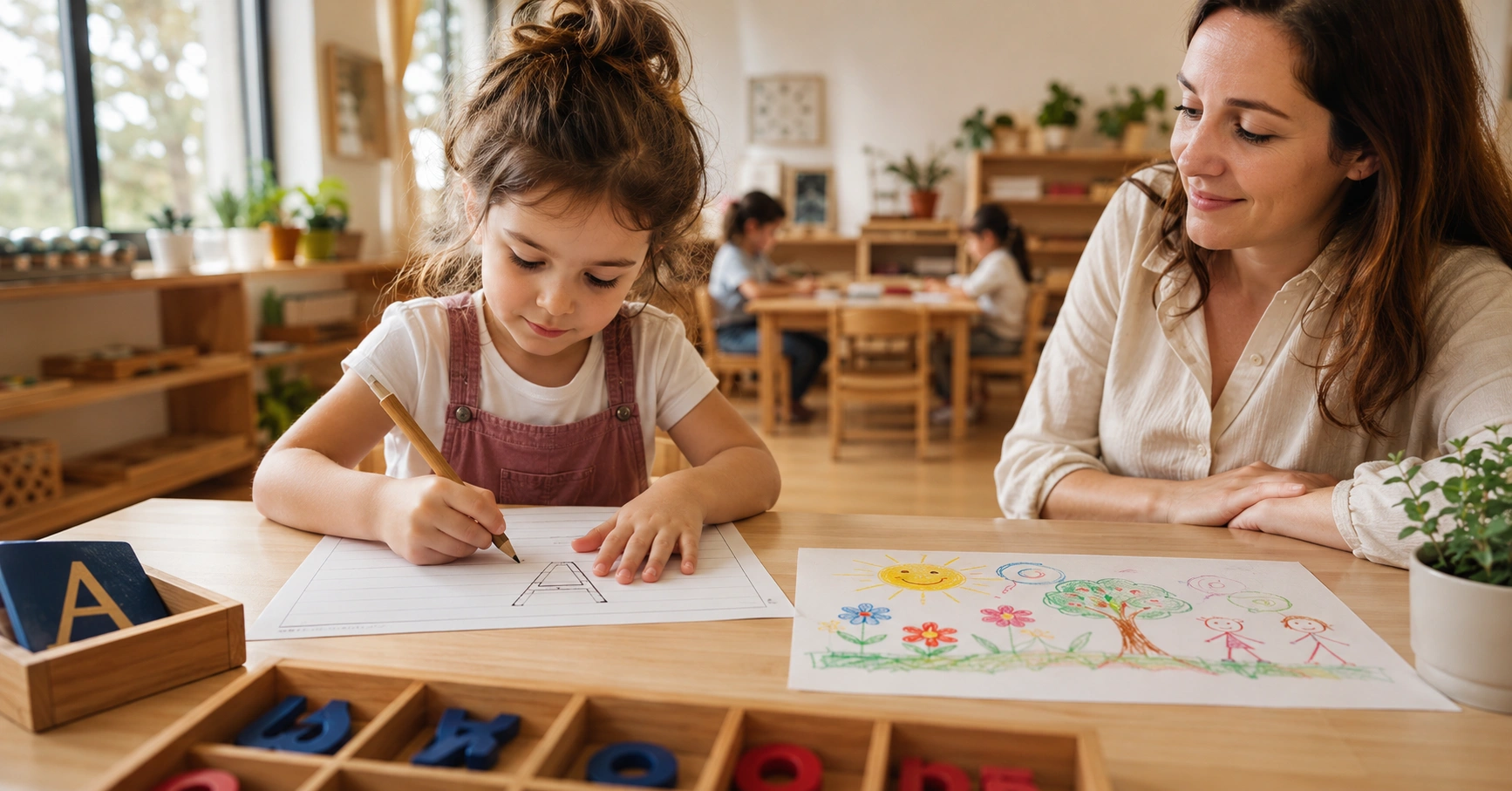
Materials like sandpaper letters allow children to trace each letter shape with their fingers, connecting touch, sight, and sound all at once. The moveable alphabet lets children build words before they’re even able to hold a pencil steadily, removing frustration from the process.
Everyday practical life activities – pouring, buttoning, spooning – quietly strengthen the same fine motor skills needed for writing. Add in tracing exercises and other sensorial materials, and children build writing readiness through hands-on learning rather than worksheets or drills.
How Cedarbrook Encourages Early Writing
At Cedarbrook Montessori School, we believe writing should never feel forced. Our classrooms are thoughtfully prepared with writing-rich materials, and our experienced educators observe each child closely to know exactly when they’re ready to move from drawing toward forming real letters.
Because every child develops at their own pace, our approach honors individual timing rather than a one-size-fits-all curriculum. Whether a child is still happily scribbling or is beginning to write their first name, our child-centered environment meets them exactly where they are.
Final Thought
When it comes to real letters vs. drawing, this was never meant to be a competition. Drawing builds the creative and physical foundation a child needs, while writing strengthens literacy, communication, and lifelong learning. Together, they form a natural, connected path toward confident self-expression.
If you’d like to see this process in action, we’d love to welcome you for a visit. Reach out to Cedarbrook Montessori School today to learn how our Montessori classrooms nurture your child’s journey from first scribbles to real, meaningful writing.
Want to see this in action? how early writing fits into our Language curriculum.
