- May 13, 2026
- 9:49 am
When you bring home a newborn, it’s tempting to buy every cute toy on the shelf. But babies between 0 and 6 months don’t need flashing lights or noisy gadgets. What they really need is simple, sensory-rich play that supports natural development.
That’s where Montessori toys shine.
The best Montessori toys for babies (0–6 months) are designed to encourage curiosity, movement, concentration, and independence even at a very young age. These toys are simple, purposeful, and made to match your baby’s developmental stage.
In this guide, you’ll discover the top Montessori toys for infants, how they help development, and what to avoid when shopping.
What Are Montessori Toys for Babies?
The Montessori approach, created by Maria Montessori, focuses on child-led learning through hands-on experiences.
For babies aged 0–6 months, Montessori toys are usually:
- Made from natural materials
- Simple and uncluttered
- Designed to stimulate one skill at a time
- Safe for sensory exploration
- Open-ended rather than overstimulating
Unlike electronic toys that do all the work, Montessori toys encourage babies to observe, reach, kick, grasp, and explore at their own pace.
And honestly? Babies often stay engaged longer with simpler toys than with loud battery-powered ones.
Why Montessori Toys Matter in the First 6 Months
The first six months are packed with rapid brain development.
Your baby is learning to:
- Focus their eyes
- Track movement
- Recognize sounds
- Develop hand-eye coordination
- Strengthen neck and core muscles
- Understand cause and effect
The right Montessori toys support these milestones naturally without overwhelming your baby’s senses.
A black-and-white mobile hanging above a newborn may not look exciting to adults, but to a baby, it’s fascinating.
Best Montessori Toys for Babies (0–6 Months)
Montessori Mobiles
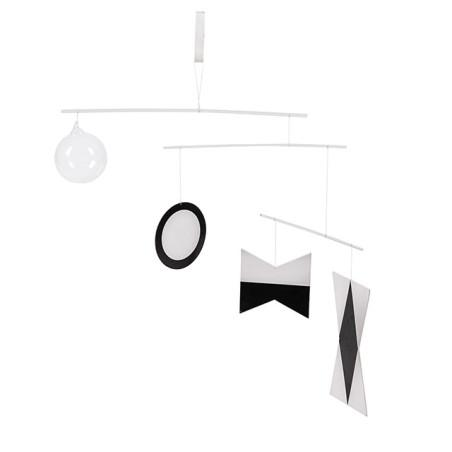
Montessori mobiles are one of the most recommended toys for newborns.
Different mobiles are introduced as your baby develops visual skills.
Popular Montessori Mobiles:
- Munari Mobile (high contrast for newborns)
- Octahedron Mobile
- Gobbi Mobile
- Dancers Mobile
Why They’re Great:
- Encourage visual tracking
- Improve concentration
- Develop depth perception
- Support calm observation
Practical tip: Hang the mobile low enough for your baby to focus on it but safely out of reach.
High-Contrast Black and White Cards
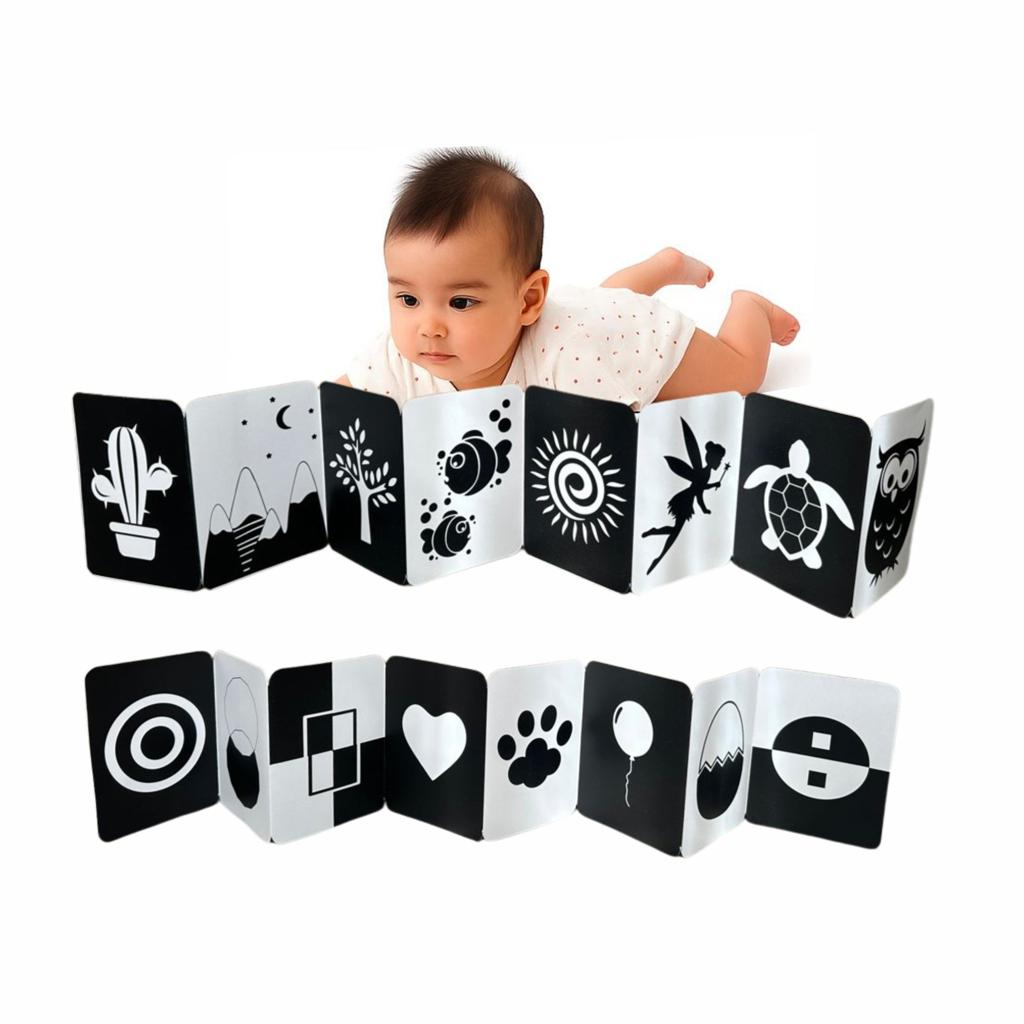
Newborns can’t see bright colors clearly at first. High-contrast black and white patterns are much easier for them to process.
These cards help babies:
- Strengthen visual focus
- Develop attention span
- Stimulate early brain development
You can place them near a changing table or use them during tummy time.
Many parents notice their newborn staring at these cards longer than expected. That’s actually a good sign it means their brain is actively processing visual information.
Wooden Grasping Toys
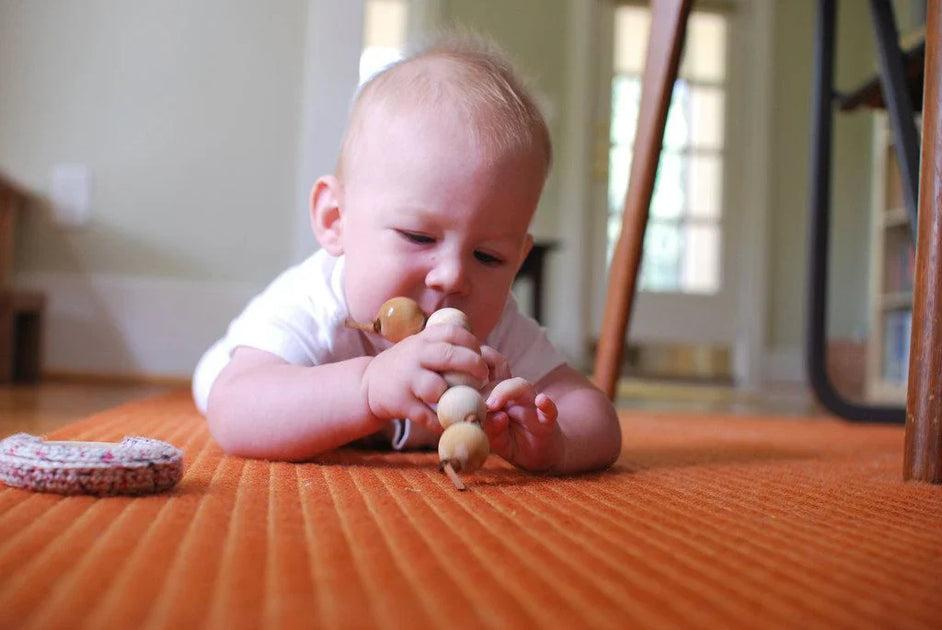
Around 2–4 months, babies begin trying to grasp objects intentionally.
Simple wooden grasping toys help strengthen:
- Grip control
- Hand coordination
- Motor skills
Look for:
- Lightweight wooden rings
- Interlocking discs
- Wooden rattles
- Grasping beads
Natural wood also provides a pleasant sensory experience compared to plastic toys.
Montessori Play Gym
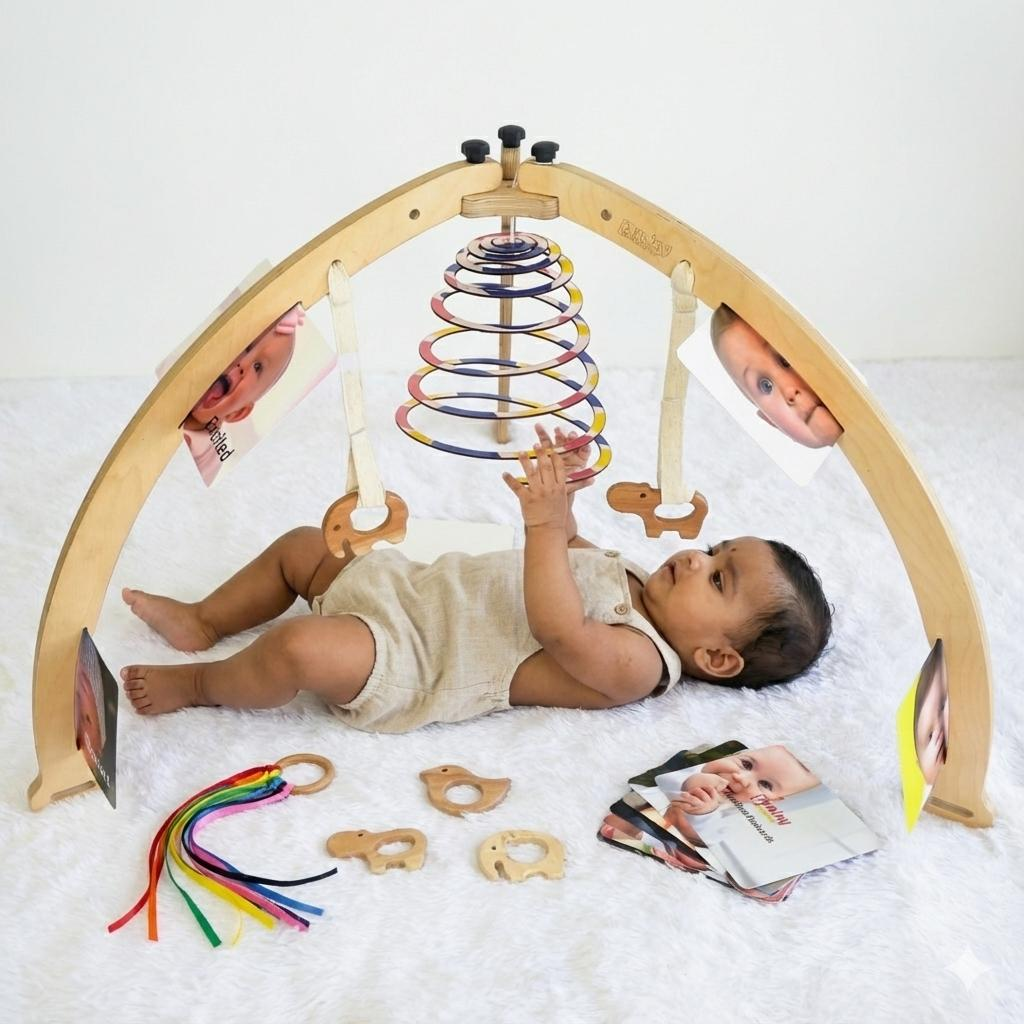
A Montessori play gym encourages movement and independent exploration.
Unlike overstimulating activity centers with flashing lights, Montessori gyms are calm and intentional.
Babies can:
- Reach for hanging objects
- Practice kicking
- Improve coordination
- Build muscle strength
A simple wooden play gym with a few hanging toys is usually enough.
More toys don’t always mean more engagement.
Sensory Balls and Fabric Toys
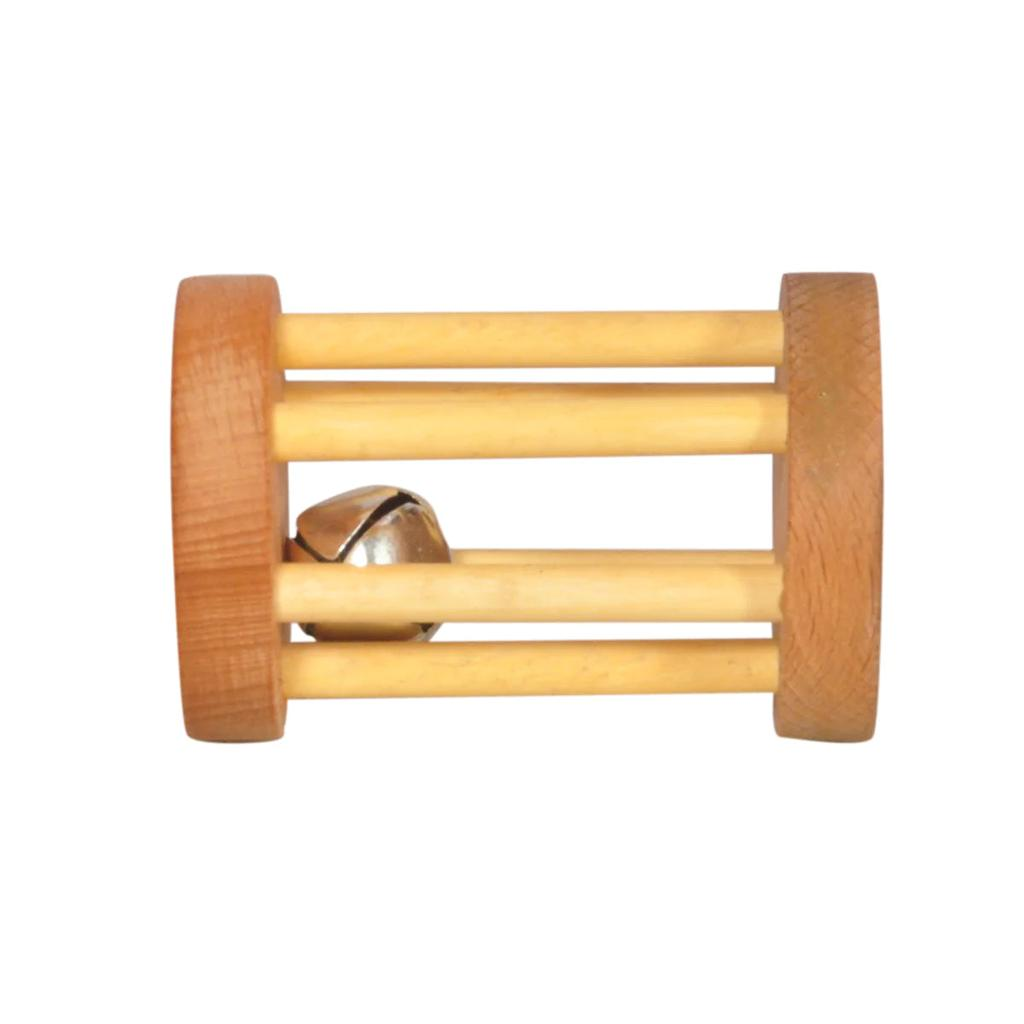
Soft sensory balls are wonderful for babies around 4–6 months.
They encourage:
- Reaching
- Rolling
- Tactile exploration
- Early movement
Textured fabrics, gentle rattles, and lightweight balls are ideal at this age.
Some babies become obsessed with crinkly textures. Others love soft cotton textures. It’s interesting how early preferences start showing up.
How to Choose the Best Montessori Toys for Babies
Prioritize Simplicity
Babies don’t need complicated toys.
In fact, too many sounds, lights, and buttons can overwhelm them.
Choose toys that focus on one developmental skill at a time.
Look for Natural Materials
Wood, cotton, silicone, and organic fabrics are often better choices than cheap plastic.
They’re:
- More durable
- Safer for mouthing
- Better for sensory exploration
Avoid Overstimulation
Many commercial baby toys are extremely noisy and flashy.
Montessori philosophy encourages calm, focused engagement instead.
A toy that allows quiet concentration is often more beneficial than one constantly demanding attention.
Common Mistakes Parents Make
Buying Too Many Toys
This happens a lot.
Babies actually engage better with fewer options.
Rotating 4–5 toys works better than overflowing toy bins.
Choosing Toys Too Advanced
A 2-month-old doesn’t need complicated activity panels.
Age-appropriate toys are more effective because they match current developmental abilities.
Ignoring Safety
Always check for:
- Non-toxic materials
- Smooth finishes
- No loose parts
- Age recommendations
Safety matters more than aesthetics.
Are Montessori Toys Worth It?
For many parents, yes.
Montessori toys often:
- Last longer
- Encourage deeper engagement
- Support developmental milestones
- Reduce overstimulation
You also don’t need an entire Montessori nursery to see benefits.
Even introducing a few thoughtful toys can make a difference.
The best Montessori toys for babies (0–6 months) are simple, calming, and development-focused.
You don’t need dozens of toys or expensive gadgets. A few carefully chosen Montessori materials can support your baby’s natural curiosity beautifully.
Start with basics like:
- Montessori mobiles
- High-contrast cards
- Wooden grasping toys
- Sensory balls
- A simple play gym
Keep things calm, uncluttered, and baby-led.
Want to see this in action? learn more and book a tour.
Curious what the real classroom materials look like? Our Montessori curriculum page covers the five areas and the materials in each, and you are welcome to visit a classroom in Ajax or Oakville to see them in use.
