- April 13, 2026
- 7:30 am
Language development in early childhood goes far beyond learning how to speak. It shapes how children think, express emotions, and connect with others. Montessori preschools approach this process in a natural and deeply engaging manner for the child.
Instead of formal lessons and repetition, children absorb language through daily experiences. It may look simple from the outside, but there is a thoughtful system behind it.
Why Early Language Development Is Important
The early years, especially between ages two and six, are critical for language growth. During this period, children can absorb sounds, words, and sentence patterns effortlessly. This is why the environment matters so much. A child surrounded by rich language experiences will naturally develop stronger communication skills.
In Montessori preschool, language is not taught as a separate subject. It is part of everything the child does.
How Montessori Supports Language Development
The Montessori method approaches language as a natural outcome of interaction, not something forced.
Prepared Environment
The classroom is carefully arranged to encourage communication. Objects are organized, labeled, and accessible.
For example, when children use picture cards or real objects, they learn names, categories, and descriptions. This builds vocabulary in a meaningful way.
Children are free to explore these materials at their pace, which makes learning more effective.
Meaningful Conversations
Teachers guide rather than lecture. They speak with children, not at them.
Simple daily activities become opportunities for language growth. For example, during a task like pouring water, a teacher might describe the process or ask questions.
This kind of interaction helps children build vocabulary and understand how language works in real situations.
Multi Sensory Learning
Montessori uses hands on materials that engage multiple senses. This helps children remember and understand language more deeply.
Common tools include:
Sandpaper Letters
Children trace letters with their fingers while saying the sounds. This connects movement with sound and visual recognition.
Moveable Alphabet
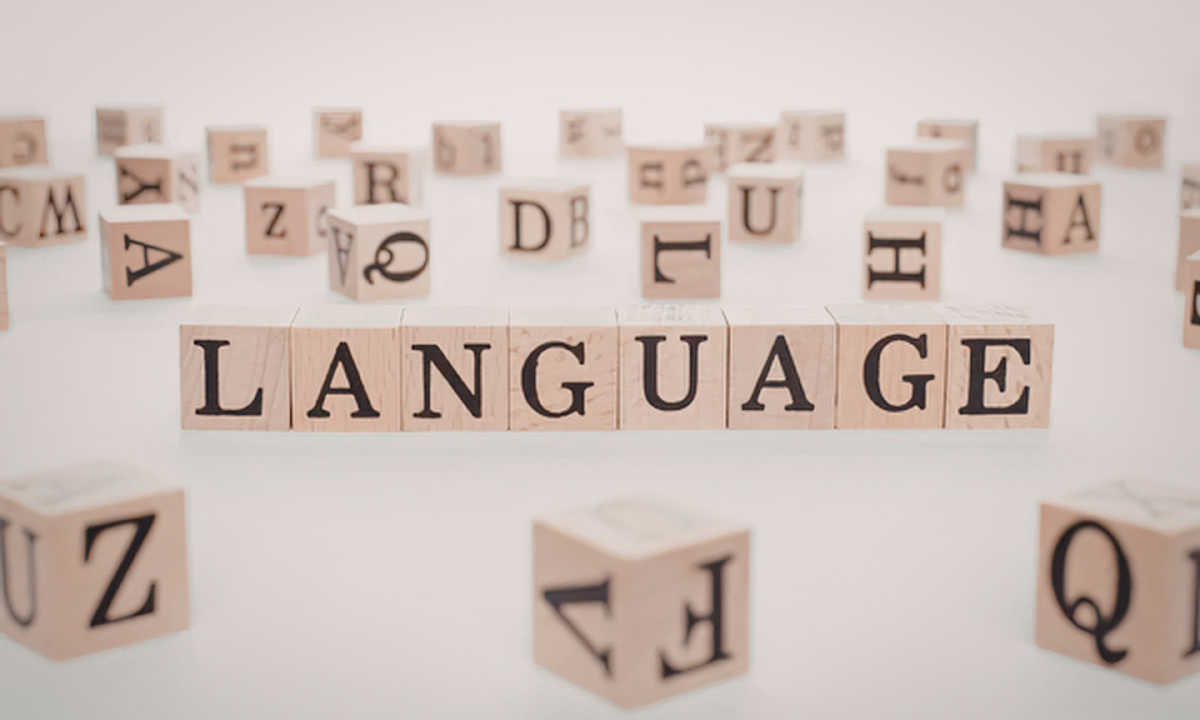
Children form words using physical letters before they learn to write with a pencil. This allows them to focus on language without struggling with motor skills.
Object and Picture Matching
Children match real objects with words or images. This strengthens the connection between language and the real world.
Role of Practical Life Activities
Practical life activities play a major role in language development.
Tasks like pouring, cleaning, or arranging items involve clear steps. Teachers often describe these steps as children perform them.
For example, a teacher may say, “First we pick up the cup, then we pour slowly.”
This helps children learn sequencing, action words, and descriptive language in a natural context.
Storytelling and Reading
Reading and storytelling are important parts of the Montessori classroom.
Children are not just passive listeners. They participate by answering questions, predicting outcomes, and retelling stories.
This improves comprehension and builds confidence in speaking.
Over time, children begin to understand how stories are structured, which supports both reading and writing skills.
Mixed Age Learning
Montessori classrooms typically include children of different ages, usually from three to six years old.
Younger children learn by observing older ones. They pick up new words and sentence patterns naturally.
Older children benefit by explaining ideas to younger peers. Teaching reinforces their own understanding and language ability.
This creates a strong, collaborative learning environment.
Encouraging Natural Expression
Children are encouraged to speak freely without fear of making mistakes.
Instead of correcting directly, teachers model the correct form of language.
For example, if a child says, “I goed outside,” the teacher may respond, “You went outside? That sounds fun.”
This approach builds confidence while gently improving language skills.
Exposure to Multiple Languages
Many Montessori classrooms introduce more than one language.
Children can absorb multiple languages more easily during early childhood. Exposure may include songs, labels, and simple conversations.
This improves communication skills and builds cultural awareness.
Real Life Example
Consider a child who initially uses only single words like “water” or “toy.”
After a few months in a Montessori preschool, the same child may begin forming complete sentences such as “Can I have some water please” or “I want to play with this.”
This growth happens through daily interaction, not formal drills.
Supporting Language Development at Home
Parents can extend Montessori principles into everyday life.
Talk During Activities
Describe what you are doing. For example, “I am washing the dishes now.”
Ask Open Questions
Encourage detailed responses by asking questions like “What did you enjoy today?”
Read Regularly
Reading together every day builds vocabulary and comprehension.
Limit Passive Screen Use
Children learn language best through interaction, not passive listening.
Encourage Independence
When children do things themselves, they naturally use more language.
Common Misunderstandings
Some people believe Montessori lacks structure. In reality, it is carefully organized, just less rigid in appearance.
Others think children learn to read late. Montessori focuses on readiness rather than strict timelines. Many children begin forming words early using hands on tools.
Another misconception is that it is too unstructured. In truth, children have freedom within clear boundaries.
Long Term Benefits
Children who develop language skills in a Montessori environment often show strong communication abilities and confidence.
They tend to understand what they read more deeply and express their ideas clearly.
Most importantly, they develop a natural interest in language, which supports lifelong learning.
Conclusion
Language development in Montessori preschool is built on real experiences, meaningful interaction, and a carefully prepared environment. Children are not pushed to learn. They are guided in a way that makes language a natural part of life.
Want to see this in action? how language development fits into our curriculum.
