- July 10, 2026
- 1:56 pm
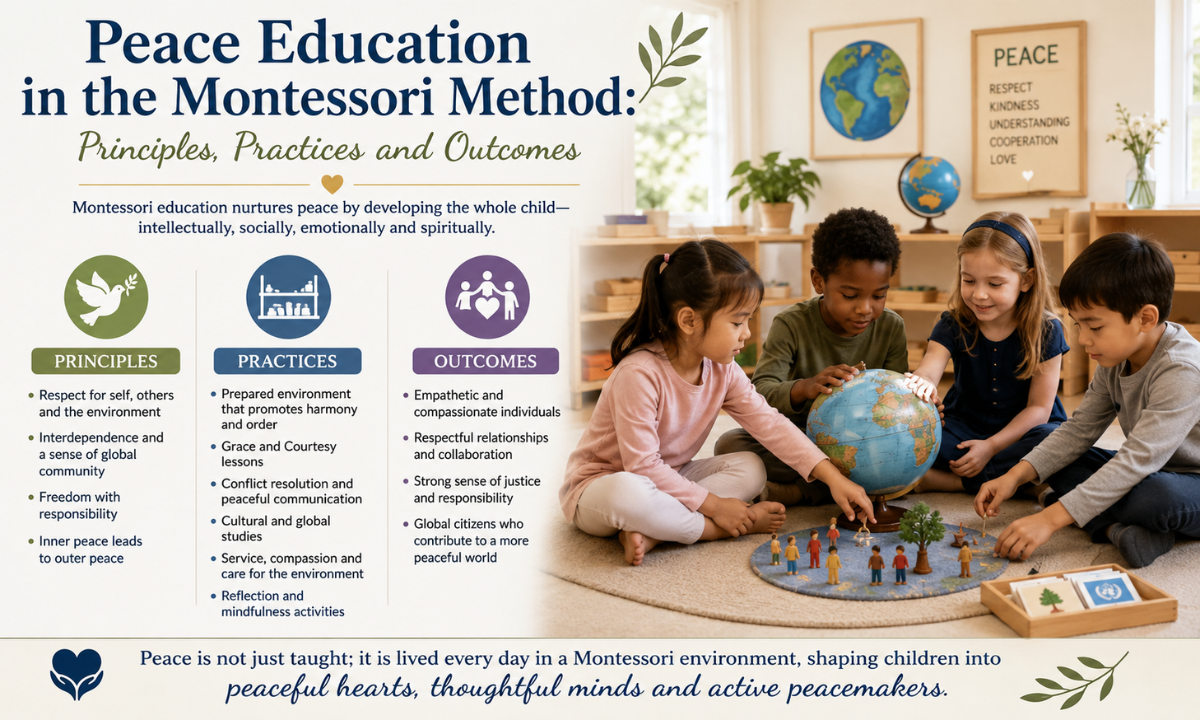
Peace is more than the absence of conflict. It is a way of thinking, living, and interacting with others. In today’s world, where children are exposed to social, emotional, and cultural challenges from an early age, peace education has become an essential part of learning. It helps children develop respect, empathy, kindness, cooperation, and responsibility. Among the many educational approaches that support peace education, the Montessori method stands out for its child-centered philosophy and its commitment to nurturing peaceful individuals.
Developed by Italian physician and educator Maria Montessori, the Montessori method views education as a pathway to creating a more peaceful society. Montessori believed that children naturally seek harmony when they are given freedom within a structured and respectful environment. Instead of teaching peace only through lessons or discussions, Montessori schools encourage children to experience peace in their daily interactions, classroom routines, and relationships.
This article explores the principles, practices, values, and outcomes of peace education in the Montessori method while highlighting its importance in shaping responsible and compassionate citizens.
Understanding Peace Education
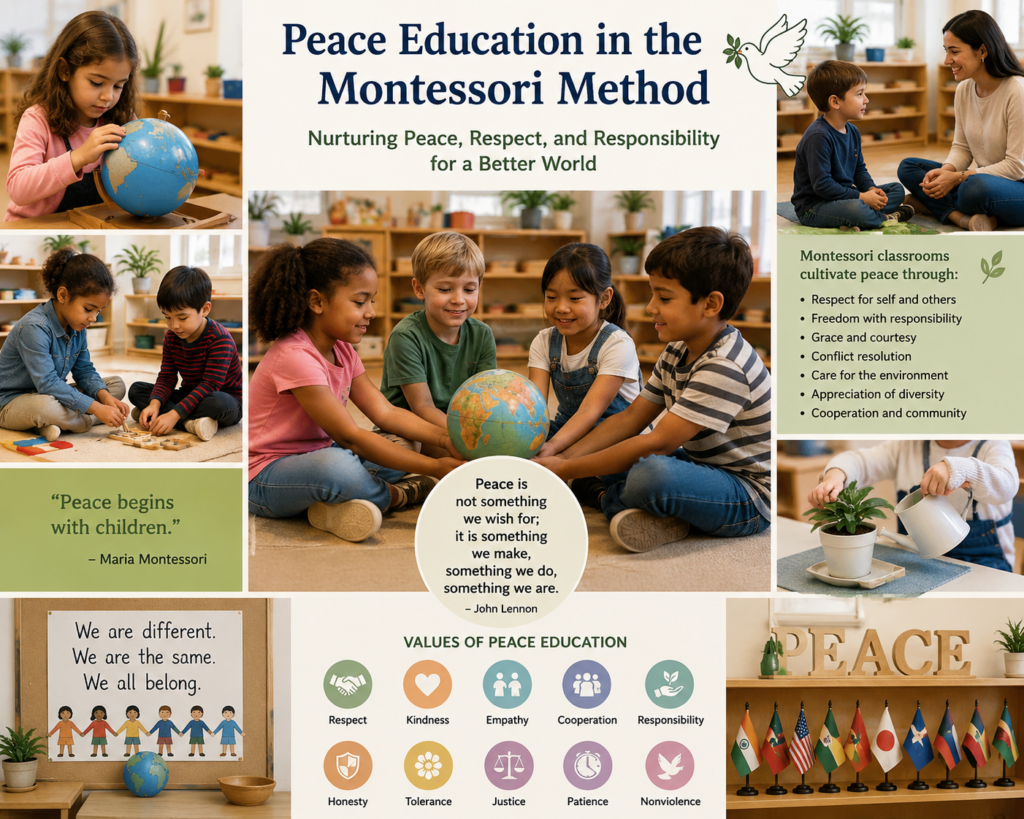
Peace education is a process that helps learners develop the knowledge, attitudes, skills, and values needed to resolve conflicts peacefully and build positive relationships. It encourages respect for human dignity, cultural diversity, social justice, and environmental responsibility.
Rather than focusing only on avoiding violence, peace education promotes positive behaviors that strengthen communities and improve the quality of life.
Its primary goals include:
- Developing empathy and compassion
- Encouraging respect for diversity
- Promoting cooperation instead of competition
- Building communication and conflict resolution skills
- Fostering responsibility and self-discipline
- Creating active and caring global citizens
Peace education begins in early childhood because the values learned during these formative years often remain with individuals throughout life.
Montessori’s Vision of Peace
Maria Montessori believed that education is the strongest foundation for lasting peace. She often emphasized that adults cannot simply create peace through laws or political decisions. Instead, peace begins with children who learn to understand themselves, respect others, and contribute positively to society.
According to Montessori, every child has the potential to become a peaceful individual if provided with an environment that supports independence, responsibility, and mutual respect.
In a Montessori classroom, peace is not treated as a separate subject. It becomes part of everyday learning through classroom culture, collaborative activities, and respectful interactions between teachers and students.
This philosophy encourages children to become thoughtful individuals who understand the importance of fairness, kindness, and cooperation.
Principles of Peace Education in the Montessori Method
Several key principles guide peace education in Montessori schools.
Respect for the Child
Respect forms the foundation of Montessori education. Every child is recognized as an individual with unique abilities, interests, and learning needs.
Teachers listen carefully to children, encourage their opinions, and provide opportunities for independent decision-making. This respectful environment helps children develop confidence while learning to respect the feelings and rights of others.
Freedom with Responsibility
Montessori classrooms offer children the freedom to choose activities according to their interests. However, this freedom comes with responsibility.
Children learn that their choices should not disturb or harm others. Over time, they develop self-control, accountability, and consideration for the community.
Prepared Environment
The classroom environment plays an important role in promoting peace.
Montessori classrooms are carefully organized to create a calm, orderly, and welcoming atmosphere. Materials are accessible, spaces are clean, and routines are predictable. Such an environment reduces stress, encourages concentration, and promotes respectful behavior.
Mixed-Age Learning
Children of different ages learn together in Montessori classrooms.
Older children naturally become role models and mentors, while younger children learn through observation and interaction. This arrangement promotes cooperation rather than unhealthy competition and encourages patience, leadership, and mutual support.
Learning Through Experience
Montessori education emphasizes hands-on learning instead of memorization.
Children develop social and emotional skills by participating in real-life experiences such as sharing materials, solving disagreements, caring for plants, and helping classmates. These everyday experiences strengthen peaceful habits more effectively than lectures alone.
Practices That Promote Peace Education
Montessori schools use several practical approaches to nurture peaceful behavior.
Grace and Courtesy Lessons
One of the most distinctive features of Montessori education is the teaching of grace and courtesy.
Children practice everyday social behaviors such as:
- Greeting others politely
- Waiting patiently for their turn
- Speaking respectfully
- Listening without interrupting
- Offering help when needed
- Saying “please” and “thank you”
- Resolving disagreements calmly
These lessons provide children with practical skills for positive social interaction.
Conflict Resolution
Conflicts naturally occur among children, but Montessori teachers view them as opportunities for learning.
Instead of imposing punishment immediately, teachers guide children to:
- Express their feelings honestly
- Listen to different perspectives
- Identify the problem together
- Discuss possible solutions
- Agree on a fair outcome
This approach helps children develop emotional intelligence and problem-solving skills.
Collaborative Learning
Many classroom activities encourage teamwork.
Children work together to complete projects, care for classroom materials, prepare snacks, and maintain the learning environment. Such experiences strengthen cooperation, communication, and shared responsibility.
Caring for the Environment
Montessori education connects peace with care for nature.
Children water plants, recycle materials, clean their surroundings, and learn about living things. These activities encourage environmental awareness and teach that caring for the Earth is also an important part of creating a peaceful future.
Cultural Education
Montessori classrooms introduce children to different countries, traditions, languages, music, and customs.
Learning about various cultures helps children appreciate diversity and reduce prejudice. They begin to understand that differences enrich society rather than divide it.
Core Values of Peace Education in Montessori
Peace education is deeply connected to a set of values that guide children’s behavior and character development.
Some of the most important values include:
- Respect for self and others
- Kindness and compassion
- Empathy
- Honesty
- Cooperation
- Responsibility
- Patience
- Tolerance
- Equality
- Justice
- Forgiveness
- Gratitude
- Environmental stewardship
- Nonviolence
- Global citizenship
These values are not taught only through words. They become meaningful because children experience them daily within the classroom community.
Role of the Montessori Teacher
The teacher plays a unique role in Montessori education.
Rather than acting as the center of instruction, the teacher serves as a guide, observer, and role model.
A Montessori teacher promotes peace by:
- Demonstrating respectful communication
- Encouraging independence
- Supporting emotional development
- Helping children solve problems peacefully
- Creating an inclusive classroom
- Recognizing individual strengths
- Maintaining a calm and positive atmosphere
Children learn as much from observing the teacher’s behavior as they do from formal lessons.
Outcomes of Peace Education in Montessori
Research and classroom observations suggest that Montessori peace education produces positive outcomes in several areas of child development.
Social Development
Children become more cooperative and respectful in their interactions.
They learn to share resources, work in groups, and appreciate different viewpoints.
Emotional Development
Peace education helps children recognize and manage their emotions.
As a result, they become more confident, patient, and emotionally resilient.
Academic Growth
A peaceful classroom supports concentration and independent learning.
When children feel safe and respected, they are more willing to explore, ask questions, and develop a genuine love for learning.
Conflict Management
Children who receive peace education often resolve disagreements through communication rather than aggression.
They learn to negotiate, compromise, and seek fair solutions.
Leadership Skills
Montessori students frequently develop leadership qualities because they are encouraged to make decisions, help younger peers, and take responsibility for classroom activities.
Global Awareness
Exposure to different cultures and environmental education helps children understand their role as members of a larger global community.
They become more open-minded and socially responsible.
Challenges in Implementing Peace Education
Although Montessori peace education offers many benefits, successful implementation requires commitment from educators and families.
Some common challenges include:
- Limited teacher training in peace education
- Pressure to prioritize academic testing over character development
- Inconsistent support between home and school
- Cultural differences in approaches to discipline
- Lack of resources in some educational settings
Despite these challenges, many schools continue to integrate peace education because of its long-term benefits for children and society.
Conclusion
Peace education in the Montessori method goes beyond teaching children how to avoid conflict. It creates an environment where respect, empathy, cooperation, responsibility, and compassion become part of everyday life. By combining freedom with responsibility, hands-on learning, mixed-age classrooms, and meaningful social experiences, Montessori education helps children develop the attitudes and skills needed to build peaceful communities.
