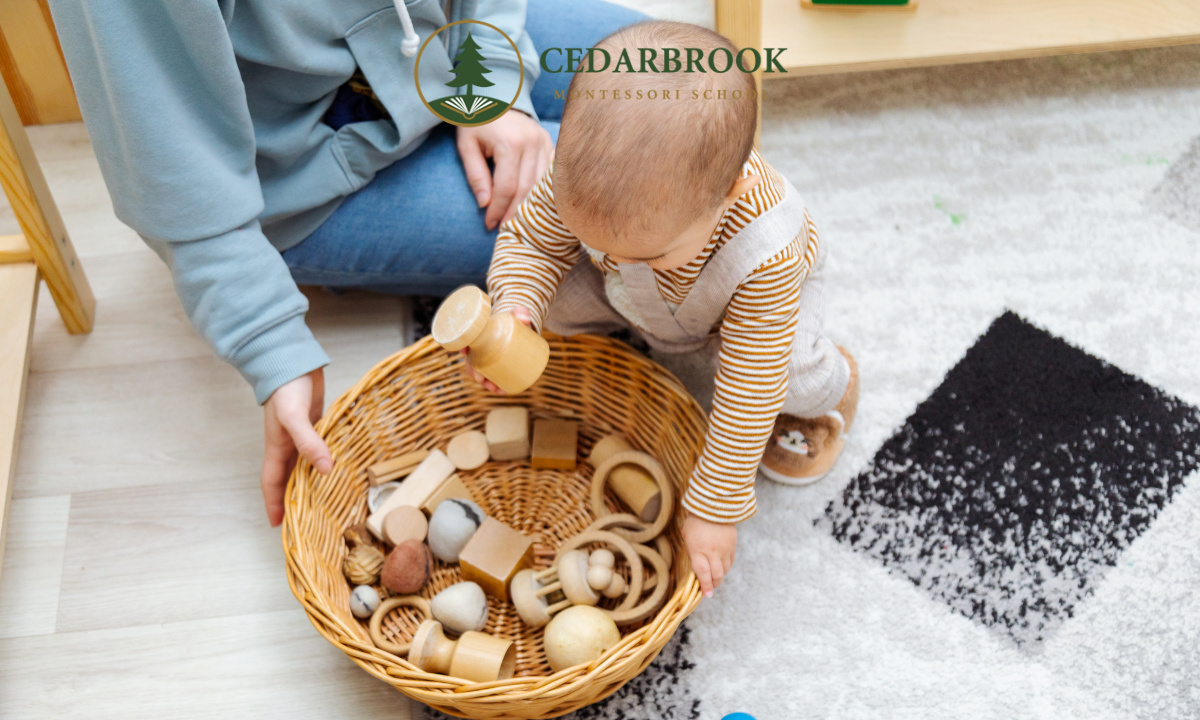
Every child enters the world with a natural curiosity and an innate desire to learn. At Cedarbrook Montessori School, we believe that education should honor this curiosity, not suppress it. The Montessori philosophy rooted in independence, freedom, and responsibility, creates an environment where children grow into confident, capable, and self-motivated learners. Rather than passively receiving information, children actively engage with their surroundings, explore ideas, and develop life skills that extend far beyond the classroom.
Table of Contents
This human-centered approach respects each child’s individuality, pace, and interests, fostering a love of learning that lasts a lifetime. In this article, we explore the core principles of the Montessori philosophy, how they are implemented in daily practice, and why families around the world recognize the Benefits of Montessori Education. Whether you are considering Montessori Education for your child or simply want to understand how it differs from conventional schooling, this guide will provide clarity and insight.
Understanding the Montessori Philosophy
Developed by Dr. Maria Montessori in the early 20th century, the Montessori method is grounded in scientific observation of how children naturally learn. Dr. Montessori discovered that when children are given the right environment, tools, and freedom within structure, they exhibit remarkable concentration, discipline, and joy in learning.
At its heart, the Montessori philosophy rests on three interconnected pillars:
- Independence – Empowering children to think, choose, and act for themselves.
- Freedom – Allowing children to explore and learn within carefully prepared boundaries.
- Responsibility – Encouraging accountability for one’s actions, environment, and community.
Together, these principles create a balanced educational model that nurtures both academic excellence and emotional intelligence.
Independence: Building Confidence Through Self-Directed Learning
Why Independence Matters in Montessori Education
Independence is one of the most defining characteristics of Montessori Education. Children are encouraged to take initiative, solve problems, and complete tasks independently, fostering confidence and resilience. From choosing their own activities to caring for their learning materials, children learn that they are capable contributors to their environment.
In a Montessori classroom, independence is cultivated through:
- Child-sized furniture and tools
- Open shelves with accessible materials
- Step-by-step learning activities that allow self-correction
These elements help children develop practical life skills while reinforcing a sense of ownership over their learning journey.
Independence Across the Five Areas of Montessori Learning
The development of independence is integrated across the five areas of Montessori learning, which include:
- Practical Life – Activities like pouring, dressing, cleaning, and food preparation that build coordination and self-care skills.
- Sensorial – Materials that refine the senses and strengthen cognitive foundations.
- Language – Reading, writing, and communication experiences that empower expression.
- Mathematics – Hands-on tools that make abstract concepts tangible and understandable.
- Cultural Studies – Geography, science, art, and history that expand worldview and curiosity.
Each area supports a child’s ability to think critically, act independently, and take pride in their accomplishments.
Freedom: Learning Through Exploration and Choice
The Role of Freedom in Montessori Classrooms
Freedom in Montessori education does not mean a lack of structure. Instead, it represents the opportunity to make meaningful choices within a thoughtfully prepared environment. Children are free to select activities that align with their interests and developmental readiness, encouraging intrinsic motivation and deep engagement.
This approach stands in contrast when examining Montessori vs Traditional Education, where learning is often teacher-directed, time-bound, and uniform. Montessori classrooms honor individual learning rhythms, allowing children to fully immerse themselves in tasks without unnecessary interruption.
How Freedom Enhances Cognitive and Emotional Growth
When children are trusted with choice, they develop:
- Strong decision-making skills
- Increased concentration
- Higher levels of creativity
- Emotional regulation and self-discipline
This freedom nurtures not only academic growth but also emotional resilience and social maturity.
Responsibility: Developing Ethical and Social Awareness
Responsibility as a Core Life Skill
Responsibility in Montessori education extends beyond completing tasks. Children learn to care for their environment, respect others, and contribute positively to their community. Daily classroom routines emphasize tidiness, cooperation, and mindfulness.
By participating in maintaining the classroom, children develop a sense of accountability and belonging. These practices foster respect for shared spaces and cultivate empathy skills that are vital for lifelong success.
Social Responsibility and Community Building
Mixed-age classrooms provide natural opportunities for peer learning and mentorship. Younger children learn by observing older classmates, while older children reinforce their knowledge by guiding others. This collaborative environment strengthens leadership, patience, and compassion.
The Benefits of Montessori Education
The Benefits of Montessori Education are both immediate and long-term, shaping children into confident, capable learners who are prepared for academic and life challenges.
Key benefits include:
- Personalized learning paths tailored to individual strengths and needs
- Enhanced critical thinking and problem-solving skills
- Improved concentration and attention span
- Strong social and emotional development
- Intrinsic motivation and love for learning
Research consistently shows that Montessori students often demonstrate advanced academic skills, greater independence, and higher levels of social competence compared to peers in conventional systems.
Montessori vs Traditional Education: A Meaningful Comparison
Understanding Montessori vs Traditional Education helps parents make informed decisions about their child’s learning environment.
| Montessori Education | Traditional Education |
|---|---|
| Child-centered learning | Teacher-directed instruction |
| Individualized pace | Standardized pace |
| Hands-on materials | Textbook-based learning |
| Multi-age classrooms | Same-age classrooms |
| Emphasis on intrinsic motivation | Emphasis on grades and rewards |
While traditional education can offer structure, Montessori education prioritizes holistic development, self-direction, and real-world readiness.
Supporting Early Development: Pre-Casa to Casa Transition Programs
Early childhood is a critical period for growth. Pre-Casa to Casa Transition Programs provide gentle support as children move from toddler environments into primary classrooms. These programs focus on nurturing independence, emotional readiness, and social adaptability.
Through structured routines, age-appropriate activities, and nurturing guidance, children gain confidence and comfort, ensuring a smooth and positive transition.
Choosing the Right Montessori School for Your Child
Selecting the right montessori school is an important decision that shapes your child’s educational foundation. Families seeking quality Montessori education often explore programs such as montessori ajaxmontessori pickering, known for their commitment to authentic Montessori practices, trained educators, and carefully prepared environments.
When evaluating a school, consider:
- Montessori accreditation and teacher credentials
- Classroom environment and learning materials
- Student-teacher ratios
- Emphasis on emotional and social development
- Parent communication and involvement
A strong Montessori program partners with families to support each child’s holistic growth.
How Cedarbrook Montessori School Embodies These Principles
At Cedarbrook Montessori School, independence, freedom, and responsibility are not abstract ideals they are lived experiences. Our classrooms are thoughtfully designed to encourage exploration, curiosity, and collaboration. Our trained educators observe each child closely, guiding them with patience and respect.
We emphasize:
- Individualized learning plans
- Safe and nurturing environments
- Strong home-school partnerships
- Holistic development across academics, emotions, and social skills
By integrating the timeless principles of Montessori education with modern insights, Cedarbrook creates an enriching space where children thrive.
The Montessori philosophy of independence, freedom, and responsibility offers far more than an academic approach it provides a foundation for lifelong success. By respecting each child’s individuality and natural pace of development, Montessori education nurtures confident learners who think critically, act responsibly and engage thoughtfully with the world around them.
Want to see this in action? see these principles built into our curriculum.
